PAINTINGS
AJANTA
CAVE PAINTINGS
the many-splendoured delights of Ajanta compiled by Subramanian Swaminathan
e-mail: sswami99@gmail.com
September 2007
Producing Depth & Relief
From very early times, Indian artists
have been using a variety of techniques to produce an illusion of the third
dimension.
Perspective
An example of expert rendering in
perspective.
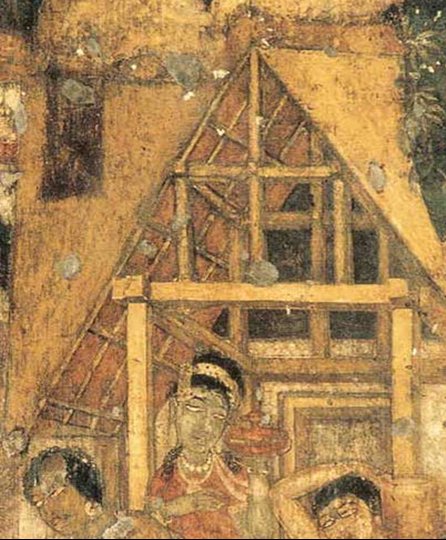
A monastery, Shibi Jataka,
Cave 17
Multiple Vision
A technique of painting scenes from different angles and merging them, similar to the modern technique called Multiple Vision.
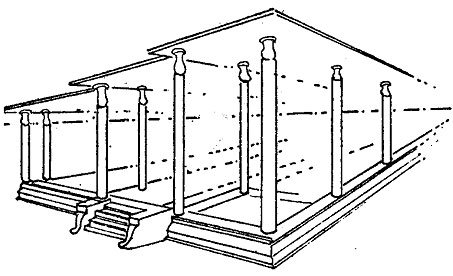
Details of the farthest pavilion
would be lost in normal perspective
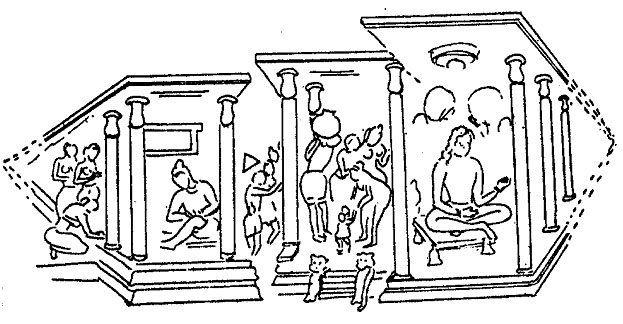
Three separate shots dissolved
to show action in all the pavilions
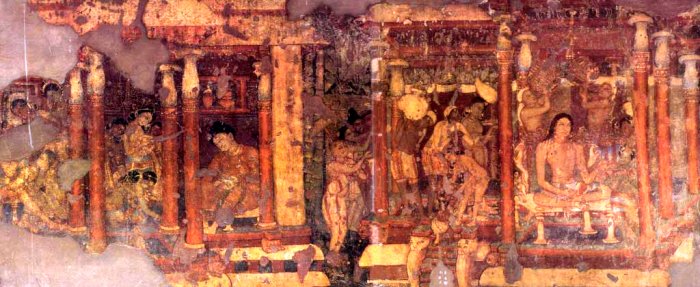
Lustration & Renunciation,
Cave 1
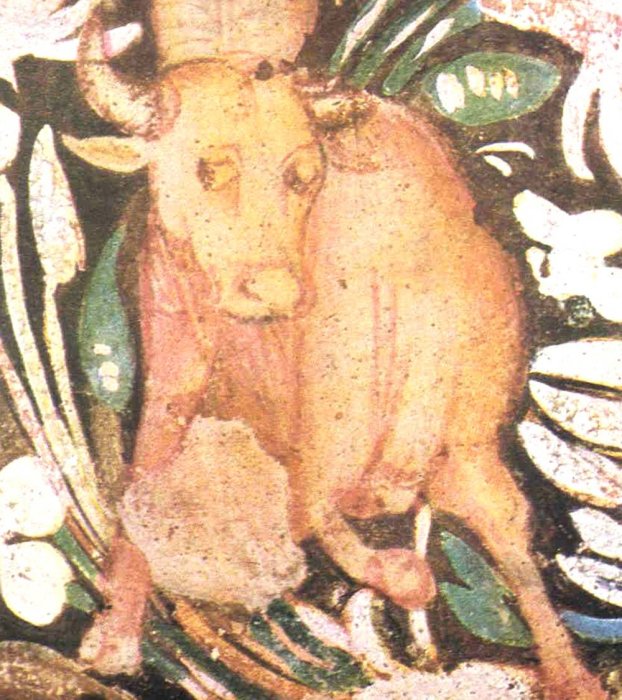
Kshaya vriddhi, ('loss-and-gain'),
Fore-shortening
A ceiling painting, Cave 1
Using Colours
Main techniques
animnonnata - flat
style
nimnonnata - relief
by shading.
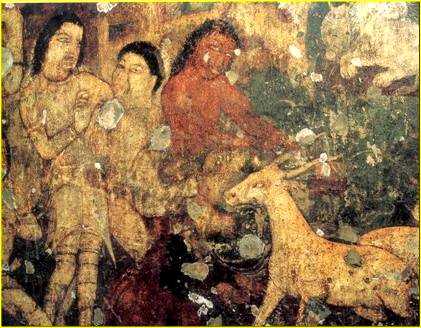
Animnonnata
A flat style that uses dark colours
for the subjects in the foreground against a background of lighter shades,
or vice versa.
Animnonnata
Nimnonnata
Vartana
Shading techniques choosing judiciously
tones and colours.
Ujjotana
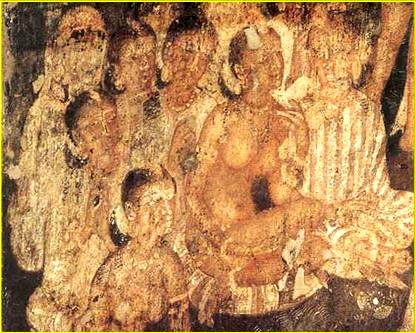
Adding highlights.
Vartana
A high-relief technique to produce
an illusion of the third dimension. There are three main variations.
Patraja - ('shading-like-the-lines-of-a-leaf')
Illusion of depth is achieved by
drawing lines to follow contour of the body.
Binduja - (dot and stipple
method)
Illusion of depth is achieved by
painting dots with variations in concentration of dots.
Airika - (a wash technique)
Illusion of depth is achieved by
executing tonal variation and avoiding hard-lines
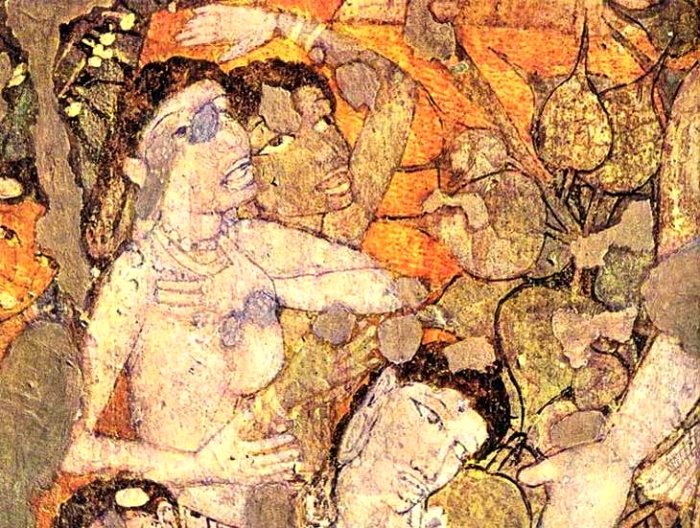
Ujjotana - (adding highlights)
Highlights in the form of white
patches added on the cheeks, the chin, the nose, etc to get a three-dimensional
effect.
Chaya-tapa - ('shade-and-shine')
This produces a chiaroscuro effect.
Use of Blue Colour (Lapis Lazuli)
In the later period lapis lazuli,
a blue, imported mineral came to be used as an effective medium for creating
visual depth,contrasting with warm red and brown tones.
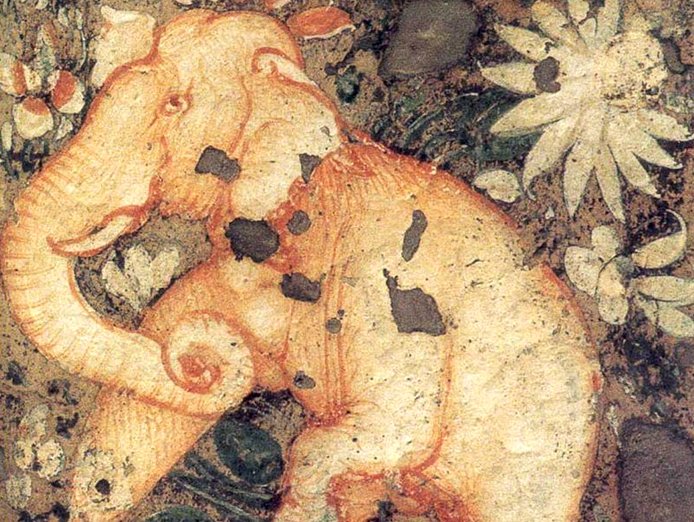
Patraja - A ceiling painting,
Cave 1
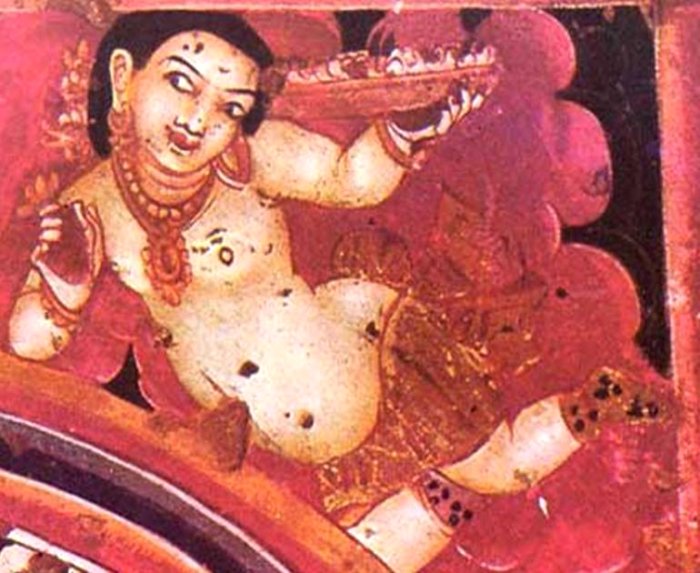
Binduja - A ceiling painting,
Cave 2
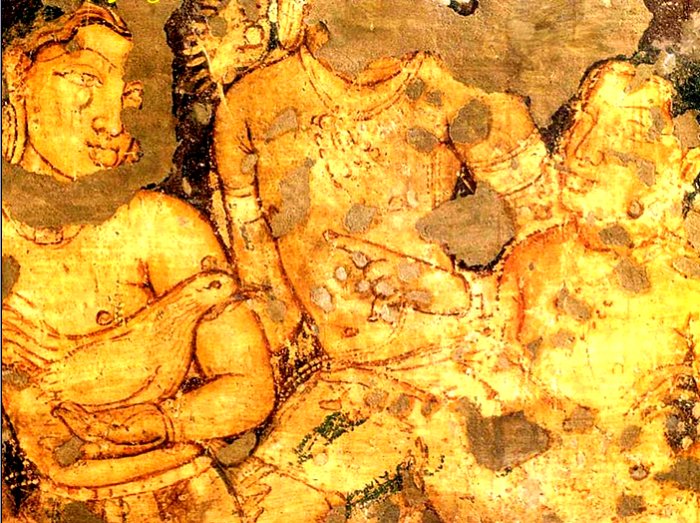
Airika - Children playing with
a Hen, Cave 2
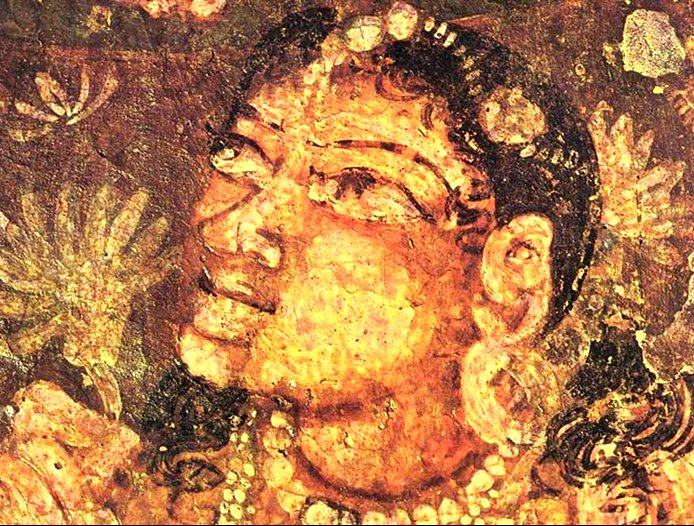
Ujjotana - A woman in a palace
scene, Cave 1
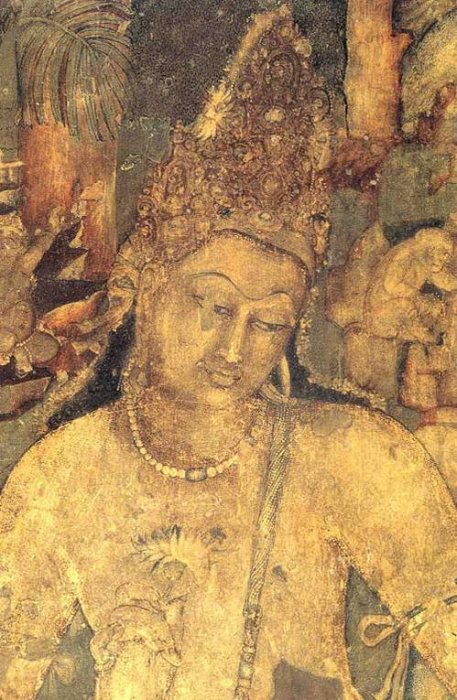
Chaya-tapa - Bodhisattva Padmapani,
Cave 1
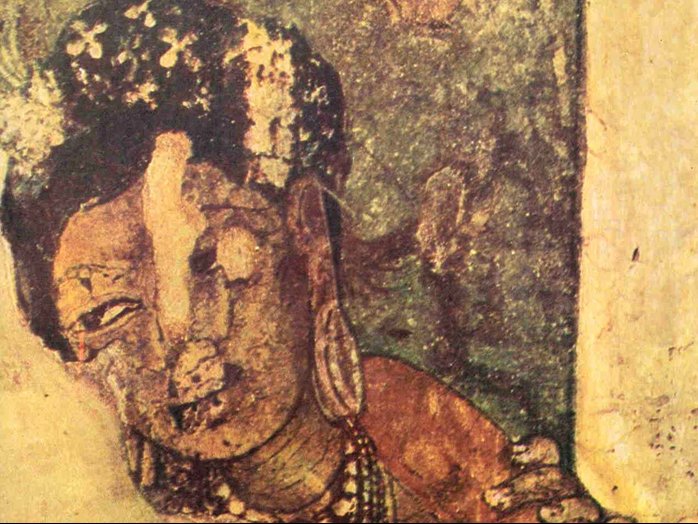
Use of Blue Colour - Simhala
Avadana, Cave 17
Back
|